Journal · journal
Rolex Air King 14010: a buyers guide to the 34mm classic

Some watches shout. The Rolex Air King has never been one of them. For most of its life it sat quietly at the edge of the catalogue, the smallest and simplest Oyster Rolex made, and it asked nothing of its owner except to be worn. That modesty is now precisely the point. The 34mm Air King is one of the last honest ways into the crown, and the reference 14010 is its most charming form.
A name born over the airfields
In the 1940s Rolex honoured Royal Air Force pilots with a small family of watches carrying Air in their names: the Air Lion, the Air Tiger, the Air Giant and the Air King. Of the four, only the Air King endured. Rolex made it a standalone model in the late 1950s, and the reference 5500 that followed ran from 1957 to 1989, one of the longest production runs in the history of the brand. It was a 34mm, time only Oyster. No date, no fuss, and a dial that read simply Precision.
Sapphire and a new calibre in 1989
After more than three decades Rolex modernised the Air King with the reference 14000, introduced in 1989. The acrylic crystal gave way to scratch resistant sapphire. Inside beat the new in house calibre 3000, a time only automatic running at 28,800 vibrations per hour, with 27 jewels and a power reserve of about 42 hours. Rolex trusted the same movement to the Explorer 14270 and the no date Submariner 14060, which says a great deal about its standing.
Two bezels were offered. The 14000 carried the classic smooth steel bezel. The 14010 wore an engine turned bezel, a ring of fine fluting broken by polished segments at each hour, catching the light in a way the smooth bezel never could. In 2000 the calibre 3000 gave way to the calibre 3130, with a full balance bridge and Breguet overcoil, and the references gained an M for modified: 14000M and 14010M.
The watch in the vault
The example in our vault is the reference in its classic dress. The light silver sunburst dial carries ROLEX OYSTER PERPETUAL in capitals, with the "Air King" name in script below the coronet at 12. Applied steel baton markers wear lume dots at their ends. Critically, the dial reads PRECISION at six o'clock, not superlative chronometer: this is the non chronometer calibre 3000, and SWISS MADE at six marks it as a later example fitted with Luminova rather than tritium. Slim stick hands and a long needle seconds hand do the telling, and the engine turned bezel, a ridged fluted ring, frames it all with quiet texture.
On the wrist the 34mm case wears with an ease that surprises first time handlers. It slides under a cuff, suits smaller wrists, and reads as refreshingly restrained on larger ones. The steel Oyster bracelet with its folding clasp keeps the whole piece firmly in daily wear territory. This is a watch that was built to be worn, not stored.
What to look for when buying a 14010
Early 14010 examples used tritium for lume, and by the mid 1990s Rolex had moved to Luminova, with SuperLuminova arriving on the later M references. Tritium plots may have developed a warm patina. Neither is better. It is a matter of taste.
Study the case for over polishing, especially around the lugs and the crisp edges of the engine turned bezel. Check the bracelet for stretch and the clasp for a firm close. The calibre 3000 is a robust in house movement with no date to set, and these references were never chronometer certified, which helped keep the Air King the most accessible watch in the Rolex case. A serial number places the watch within the 1989 to 2007 run of the 14000 series. Dial originality matters most. Box and papers are a welcome bonus.
The line goes quiet, then returns transformed
In 2007 the 14000 series gave way to the reference 114200, the first Air King to earn chronometer certification. Then in 2014 Rolex discontinued the Air King altogether and turned its attention to the Oyster Perpetual as the entry level steel watch. The exile lasted two years. In 2016 the Air King returned as the reference 116900, and almost nothing was the same: a 40mm case shared with the Milgauss, an anti magnetic calibre 3131 borrowed from the same source, and a bold black dial inspired by dashboard instruments. A 2022 update, the reference 126900, brought a new case and the calibre 3230. The quiet 34mm Air King was gone for good, which is exactly why collectors look back at it with such affection.
The case for the 34mm classic
None of this makes the 14010 a lesser watch. It makes it a time capsule from an era when Rolex built its smallest Oyster for pilots and purists rather than for the spotlight. Prices have tended to sit well below the brand's sports watches, and collectors have noted that engine turned examples draw a gentle premium over smooth bezel ones for the extra character they carry. For the buyer who wants the crown, an in house movement and an honest Oyster case with nothing to prove, the 14010 remains one of the most sensible entries into Rolex ownership. Quiet watches, it turns out, keep their appeal in the only currency that matters: the desire to wear them.
From the vault
This Rolex Oyster Perpetual Air King 34mm Silver Dial Steel Watch 14010 is priced at $6,249.00. View the piece in the vault.
Keep reading
More from the Journal
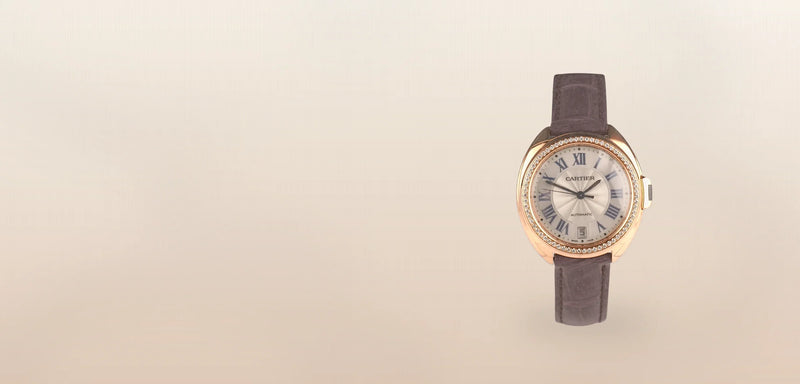
Cartier
Cartier Cle de Cartier 35mm: A Buyers Guide to the Key Crown Dress Watch
The Cle de Cartier story from the 2015 launch, the key crown, the calibre 1847 MC, the rose...
Read the entry →

Breitling
Breitling Navitimer B01 41: A Buyers Guide to the Mint Green Chronograph
The Navitimer story from the 1952 slide rule to the 2022 relaunch, the mint green dial, the calibre...
Read the entry →

journal
Rolex Explorer II 226570: A Buyers Guide to the Black Dial and the Quiet GMT
The 2021 Explorer II 226570, the calibre 3285, the black dial against the Polar, and what to check...
Read the entry →

journal
Omega De Ville Prestige: A Buyers Guide to the Mother of Pearl Dress Watch
How a mother of pearl dial is made, the De Ville story from the Seamaster family to the...
Read the entry →