Journal · Bvlgari
Bvlgari Octo Roma 103739: A Buyers Guide to the Architects Sports Watch

The Octo is the only modern sports watch that reads like a building. Put it next to a Royal Oak or a Nautilus and the difference is not in the details. It is in the intent. Those watches were drawn as instruments. The Octo was drawn as architecture: eight sides, more than a hundred facets, a case that changes shape as the light moves across it.
The design came from Gerald Genta, the most prolific watch designer of the twentieth century. The Octo was his last great case design, released under his own name around the turn of the millennium. Bvlgari acquired the Genta maison soon after and folded the Octo into the watchmaking it was building in Le Sentier. What had been an independent designer's final statement became the flagship of a Roman jeweller learning to make serious watches. The combination should not have worked. It did, because Genta had drawn a case with enough geometry in it to carry a whole collection.
Over the years the Octo family divided into two personalities, and the distinction matters when you buy. The original Octo kept the sharpest, most faceted expression of the design. The Octo Roma softened the silhouette into something rounder and more classical, a watch that sits more easily under a cuff while keeping the octagonal signature. Collectors tend to sort themselves quickly: the purists chase the hard edges, the pragmatists choose the Roma. Neither camp is wrong. They are simply buying different answers to the same question.
Reference 103739 belongs to the second family. The case is 41mm of stainless steel. The dial is blue with a Clous de Paris finish, the small hobnail texture that catches light the way a guilloche dial does, only bolder. Arabic numerals mark 6 and 12, baton indices mark the rest, and a date window sits at 3. Turn the watch over and a sapphire back shows the BVL 191, Bvlgari's own automatic calibre with a 42 hour power reserve. The watch is water resistant to 100 metres, which puts it in genuine sports watch territory rather than the dress watch category its elegance might suggest.
That calibre deserves a pause, because it is the quiet argument for the Octo Roma over its rivals. A decade ago a watch at this price from a fashion rooted maison might have carried a bought in movement. The BVL 191 is manufactured in house in Le Sentier, and it is finished to a standard you can see through the case back: Geneva stripes, a skeletonised rotor, bevelled edges. Bvlgari's watchmaking has spent the last ten years setting thinness records with the Finissimo line, and some of that seriousness has filtered down into the standard collection. The 103739 is the beneficiary.
The blue dial is the other argument. Blue has been the most consistently requested dial colour in the sports watch market for a decade, and on the Octo Roma it works unusually well. The Clous de Paris texture breaks the blue into facets of its own, so the dial shifts from navy to almost electric blue as the wrist moves. It is the dial variant collectors have tended to ask for first, and on the pre owned market it has tended to move faster than the black.
So what should a buyer check before committing to one pre owned? Start with the facets. The Octo's whole identity lives in those crisp edges, and a careless polishing can round them. Look at the case flanks in raking light: the transitions between brushed and polished surfaces should be sharp, and the screws on the bezel should sit flush. Then the bracelet, which should close with a firm click and show even wear. Then the dial and hands for originality, which matters more than perfection on a modern piece. Ask when the movement was last serviced. A watch that runs today can still be years past its service interval, and a full service on an in house calibre is not pocket change. Box and papers add certainty and value, though their absence is common and is reflected in the price.
On price, the Octo Roma occupies an interesting gap. It is priced well below the Royal Oak and the Nautilus it is so often compared with, yet it offers a manufacture movement, a genuinely original design, and finishing that stands up to watches costing twice as much. That gap has been narrowing as collectors have noticed, which is the usual way of saying the value case is strongest before everyone agrees on it.
There is a final consideration, and it is about taste. The Octo Roma is not a watch for someone who wants to blend in. The octagon is always visible, always a little architectural, always starting conversations. But for the buyer who has looked at the usual suspects and found them too familiar, the 103739 offers something rare in the modern market: a major maison's flagship sports watch, with an in house movement and a design by the most famous watch designer who ever lived, at a price that still leaves room in the collection for something else. That is a combination that does not come around often.
Keep reading
More from the Journal
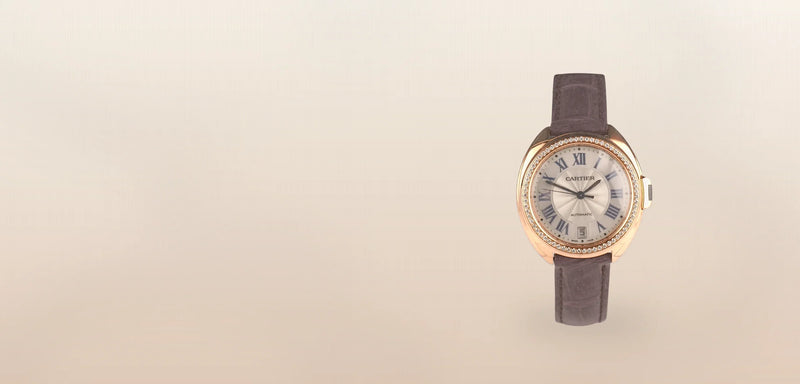
Cartier
Cartier Cle de Cartier 35mm: A Buyers Guide to the Key Crown Dress Watch
The Cle de Cartier story from the 2015 launch, the key crown, the calibre 1847 MC, the rose...
Read the entry →

Breitling
Breitling Navitimer B01 41: A Buyers Guide to the Mint Green Chronograph
The Navitimer story from the 1952 slide rule to the 2022 relaunch, the mint green dial, the calibre...
Read the entry →

journal
Rolex Explorer II 226570: A Buyers Guide to the Black Dial and the Quiet GMT
The 2021 Explorer II 226570, the calibre 3285, the black dial against the Polar, and what to check...
Read the entry →

journal
Omega De Ville Prestige: A Buyers Guide to the Mother of Pearl Dress Watch
How a mother of pearl dial is made, the De Ville story from the Seamaster family to the...
Read the entry →