Journal · Breitling
Breitling Montbrillant AB0131: a buyers guide to the slide rule chronograph

Before Breitling was a name on a slide rule bezel, it was an address. The workshops on Montbrillant Street, in the heights of La Chaux de Fonds, housed Breitling from 1892 to 1979, and it was there that the brand developed the inventions that shaped the modern wrist chronograph: the first independent chronograph pushpiece in 1915, the second independent pushpiece in 1934, and the first self winding chronograph in 1969. The Montbrillant chronograph takes its name from that street, and it is the most historically minded watch in the modern Breitling line, a 1940s and 1950s design rebuilt around a modern in house movement.
A slide rule you can actually use
The defining feature of the Montbrillant is its circular slide rule, a rotating bezel marked with logarithmic scales that sits around the dial. To a modern eye it looks decorative, a ring of tiny numbers around an already busy dial. It is not decorative. It is a mechanical calculator, built for pilots who needed to multiply, divide and convert units without reaching for a separate instrument. The principle is simple, even if the scales look dense. Two logarithmic scales slide against each other, so that aligning one number with another reads the answer off a third scale. Multiplication, division, conversion between miles and kilometres, and calculation of fuel consumption or climb rates could all be done on the wrist, in the air, with no battery and no screen.
Learning to use it takes an afternoon, and it changes how the watch feels. Set the outer scale against the inner scale, read the result, and the bezel stops being ornament and starts being a tool. The vault piece shows the layout clearly: the slide rule scales run around the cream dial, with red markings for the central chronograph scale, and a trio of subdials for the chronograph and running seconds, plus a date between four and five. The dial is busy by design. A slide rule chronograph cannot be minimal, because the scales are the point. What matters is whether the busy dial stays legible, and here it does, because the cream background keeps the black scales and the red accents separated, and the applied indices stand clear of the printed scales.
That legibility is worth testing in person. A slide rule dial that looks sharp in a photograph can blur at arm length if the printing is worn or the crystal is marked. Check that the bezel turns smoothly and clicks or grips evenly all the way around, and that the scales align cleanly at every position. A bezel that sticks, or one that has been forced, will not calculate accurately, and it will annoy every time it is used. The pushers should also be tested: start, stop and reset should feel crisp, and the chronograph hands should return exactly to zero. A chronograph hand that stops a fraction off zero is a common fault on a used chronograph, and it is easy to spot if you run the chronograph for a minute and reset it while watching.
The calibre 01 inside
The Montbrillant 01 Limited paired that historical dial with a modern milestone: Breitling manufacture calibre 01, the in house automatic chronograph that marked the brand move away from bought in movements. It is a column wheel chronograph, chronometer certified, with a power reserve reported at about 70 hours, and it can be seen through the sapphire caseback on the limited series. The steel version of the Montbrillant 01 Limited was issued in a numbered edition of 2,000 pieces, with the individual number engraved on the case, and a red gold version followed in a smaller edition of 200. That numbering ties each watch to a specific production run, and collectors have noted that the limited Montbrillant 01 best captures the moment Breitling became a manufacture in its own right.
On the wrist, the 40mm steel case is the right size for the design. It is large enough to carry the slide rule scales without crowding them, and small enough to sit under a cuff, which matters for a watch whose historical references were daily chronographs rather than oversized instruments. The vault piece is on a brown leather strap with cream stitching, which suits the cream dial and softens the tool watch character into something that works as a dress chronograph as well. Leather also keeps the weight down compared with a steel bracelet.
Against the Navitimer, the Montbrillant closest rival, the difference is one of emphasis. The Navitimer is the famous pilot watch, with its slide rule as a badge of aviation identity and a busier, more instantly recognisable dial. The Montbrillant is quieter and more classical, with a cleaner dial layout, a historic B logo in place of the winged logo, and a dressier stance on leather. A buyer who wants the most recognisable Breitling will choose the Navitimer. A buyer who wants the slide rule idea in its most elegant form will choose the Montbrillant. Against a modern Chronomat, the Montbrillant trades sportiness for history, and that trade is the whole reason to buy it.
What to check before buying
Start with the chronograph, as above: run it, stop it, reset it, and watch every hand return to zero. Then check the slide rule bezel for smooth rotation and clean alignment, and look at the dial printing under magnification if possible. The fine scales and the red central scale should be sharp, with no fading or flaking. Next, examine the case. The fluted bezel edge is vulnerable to knocks, and a dent there is both visible and difficult to repair without softening the fluting. Look at the lugs and the pushers for the same reason, and check that the crown winds smoothly and sets the time without slack.
Check the strap. Leather straps age at the lugs and at the buckle holes, and the cream stitching on the vault piece will show wear before the leather does. A tired strap should be priced in. Finally, ask about service history and about the limited edition number. A chronograph movement with a column wheel deserves regular servicing, and a limited watch deserves its number to be intact and legible on the case. If the number has been polished away, the watch has lost part of what made the limited series distinct, and the price should reflect that.
The Montbrillant is a watch for a buyer who likes tools with history. It calculates, it times, and it carries the name of the street where Breitling learned to make chronographs. It does not shout, and it does not need to. The slide rule, the cream dial and the in house calibre are enough, and together they make a chronograph that is as interesting to use as it is to look at. That is a rare combination, and it is why the Montbrillant 01 Limited still rewards a close look, more than a decade after it introduced Breitling manufacture movement to a historical design.
From the vault
From the vault: the Breitling Montbrilliant 40mm Limited Steel Leather Brand Creme Dial AB0131, priced at $5,499.99. View the piece in the vault.
Keep reading
More from the Journal
Cartier
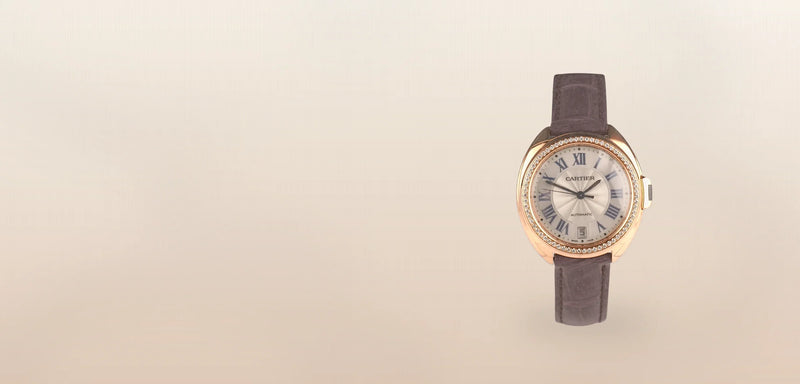
Cartier Cle de Cartier 35mm: A Buyers Guide to the Key Crown Dress Watch
The Cle de Cartier story from the 2015 launch, the key crown, the calibre 1847 MC, the rose...
Read the entry →

Breitling
Breitling Navitimer B01 41: A Buyers Guide to the Mint Green Chronograph
The Navitimer story from the 1952 slide rule to the 2022 relaunch, the mint green dial, the calibre...
Read the entry →

journal
Rolex Explorer II 226570: A Buyers Guide to the Black Dial and the Quiet GMT
The 2021 Explorer II 226570, the calibre 3285, the black dial against the Polar, and what to check...
Read the entry →

journal
Omega De Ville Prestige: A Buyers Guide to the Mother of Pearl Dress Watch
How a mother of pearl dial is made, the De Ville story from the Seamaster family to the...
Read the entry →